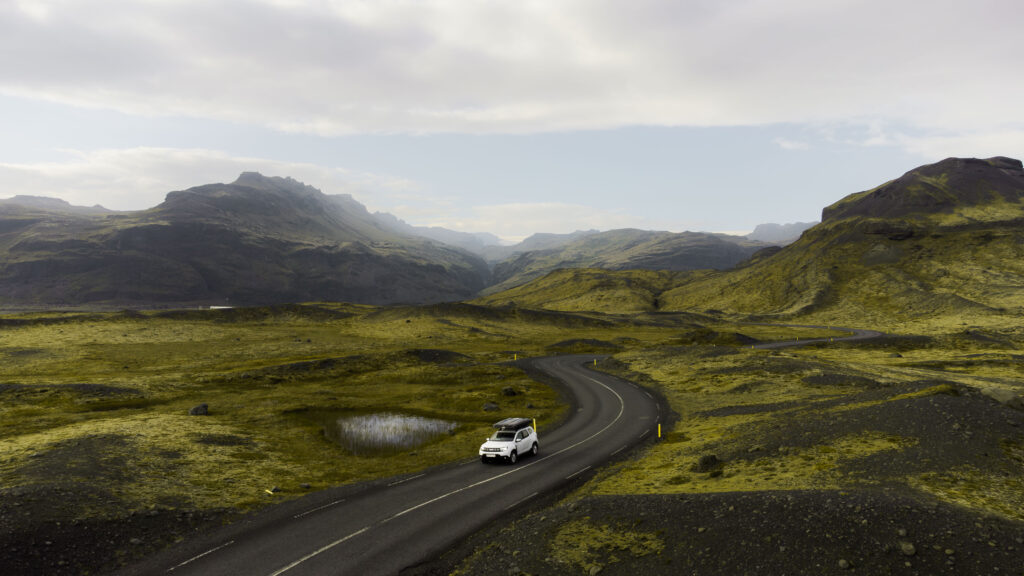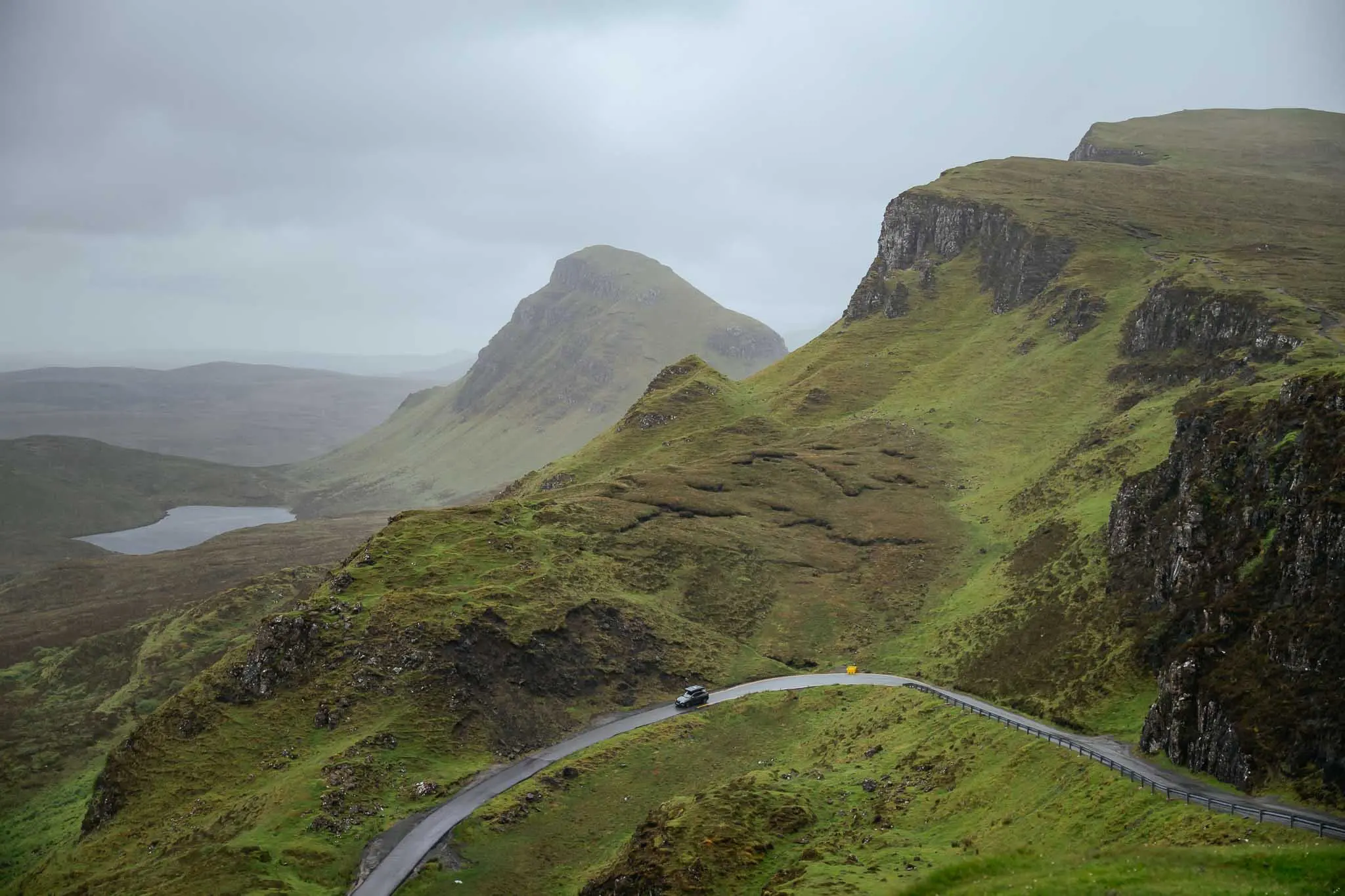
The team's tips:
- Allow plenty of time: At least 5 days, ideally 7. The NC500 isn’t a route to rush through, it’s one to savour.
- Clockwise or counterclockwise? It makes little difference, both are equally good. Most travellers head west first, saving the wild northern coast for the end.
- Book your campsites early: In July and August, some sites are fully booked several weeks in advance.
- Fill up whenever you can: Petrol stations are few and far between along the northern coast. Never let your tank drop below half full.
- Don’t pack in too many stops each day: Winding, single-track roads take longer than they look on the map.
North Coast 500: The Complete Guide to Scotland’s Legendary Road Trip
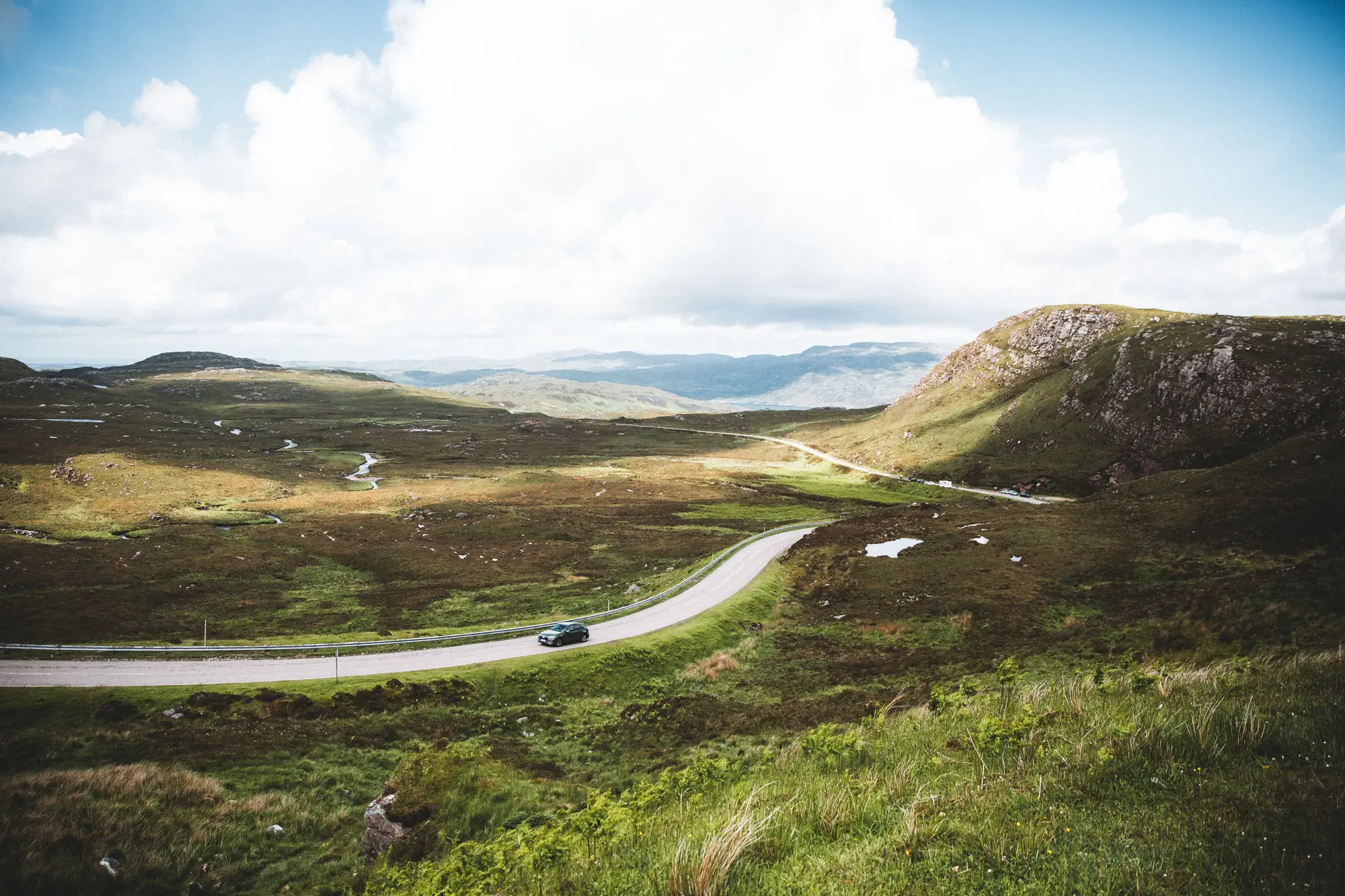
It’s known as the Scottish Route 66, and the nickname is well deserved. The North Coast 500 (NC500) is an 830 km loop starting and ending in Inverness, following Scotland’s entire northern coastline along the way. Launched in 2015, it quickly became one of Europe’s most popular road trips.
Wind-battered cliffs, deserted white-sand beaches, remote fishing villages and roads that seem to lead nowhere: the NC500 is exactly the kind of road trip you picture when you think of wild Scotland. Here’s everything you need to know before you set off.
What exactly is the North Coast 500?
The NC500 is a 516-mile loop (around 830 km) that starts and ends in Inverness, the capital of the Highlands. It passes through Wester Ross, Assynt, Sutherland and Caithness before heading back down along the east coast.
Unlike more classic Scottish road trips (Edinburgh–Skye–Highlands), the NC500 takes you through a far less-visited side of Scotland: few major cities, barely any public transport and miles of roads flanked by moorland and ocean. This is exactly the route to choose for that feeling of being at the very end of the world.
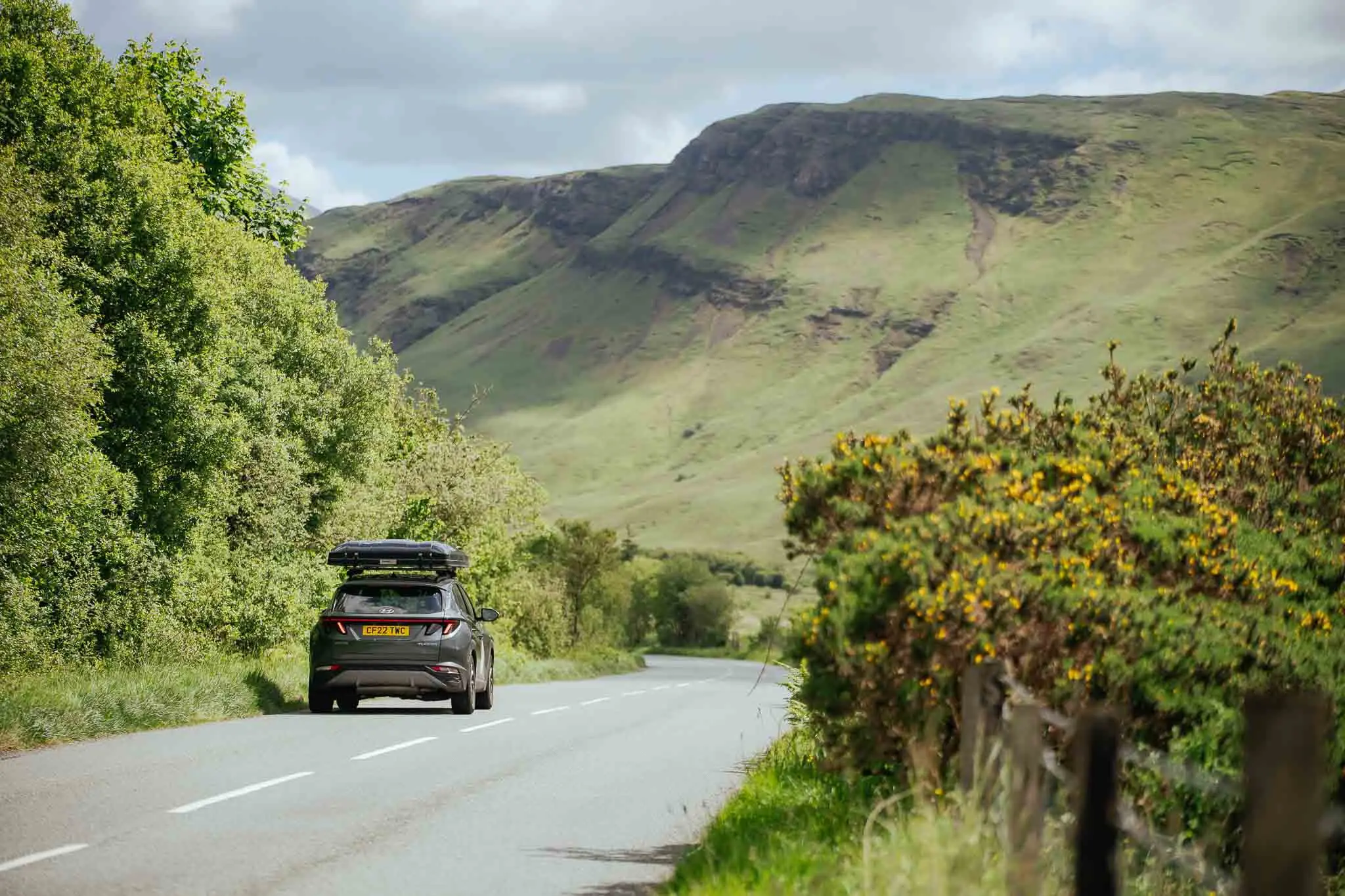
Must-see stops along the North Coast 500
Applecross and the Bealach na Bà
Scotland’s most vertiginous mountain pass, with hairpin bends, 20% gradients and breathtaking views of the Isle of Skye from the top. Guaranteed thrills, even if you’re not behind the wheel.
Ullapool
This colourful little harbour on the shores of Loch Broom is the perfect place to stop for fish & chips before continuing north.
Durness and Smoo Cave
The northwesternmost village on the British mainland, with an impressive sea cave that’s accessible on foot. It’s also the ideal starting point for reaching the deserted beaches of Sango Bay.
John o’Groats and Duncansby Head
The northeasternmost point of the British mainland. John o’Groats itself is mainly symbolic, but go 3 km further to Duncansby Head, where the cliffs and stacks (rock pinnacles) are among the finest in Scotland.
Dornoch
On the way back to Inverness, this small town on the east coast is worth a stop for its medieval cathedral and fine sandy beach.
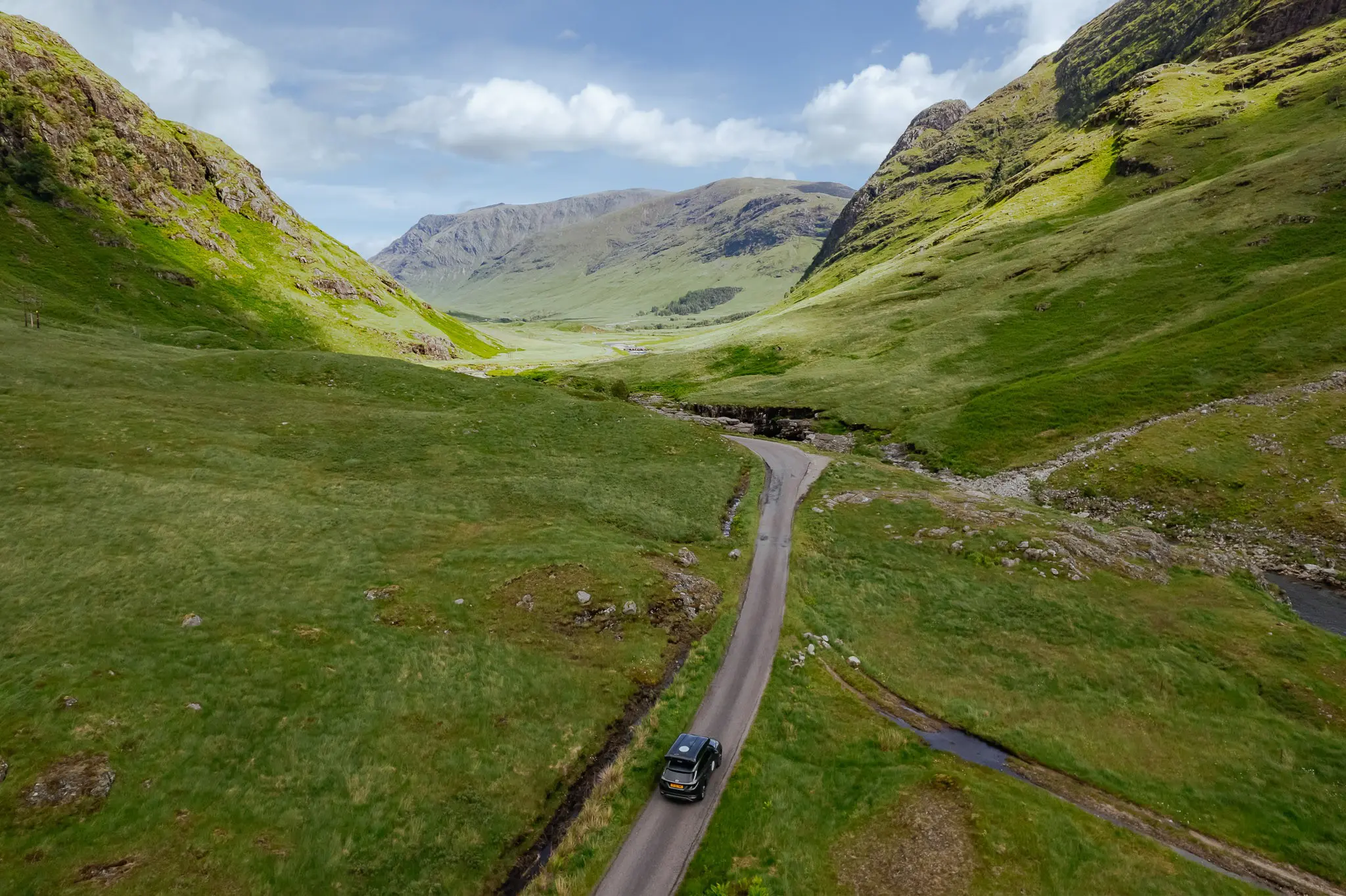
How long should you plan for the North Coast 500?
Most guides recommend 5 to 7 days to complete the full loop at a comfortable pace.
With 5 days, you can cover all the must-see spots, but the pace will be fairly brisk. With 7 days, you have time to stop on a whim at a deserted beach, go for a hike, or simply take it easy without worrying about the time.
Our advice: never count the kilometres, count the time. Covering 830 km on winding, single-track roads takes much longer than the same distance on a motorway.
When is the best time to drive the North Coast 500?
As with the rest of Scotland, May to September is the ideal time to go: roads are open, the weather is milder, and the days are long.
Since its launch in 2015, the NC500 has suffered from its own success in July and August: campsites are full, and single-track roads are busier. May, June, or September offer a much better balance of pleasant weather and peace and quiet.
Winter is spectacular, but best left to experienced travelers: very short days, roads that can be covered in snow, and many services closed out of season.
Practical Tips for the North Coast 500
The roads
A large part of the NC500 takes you along single-track roads, with passing places where vehicles can pull over to let each other through. Drive slowly, give way to uphill traffic if you’re unsure, and never park in a passing place.
Fuel
Petrol stations are few and far between along the north coast, especially between Ullapool and Durness. Fill up whenever you get the chance.
Camping
Scotland’s right to roam law applies here too, so responsible wild camping is allowed along almost the entire route. During the high season, though, official campsites with showers and electricity are much more comfortable after a day on the road.
Mobile coverage
It’s very patchy, and sometimes completely unavailable for long stretches of the north coast. Download your maps for offline use before setting off, and let friends or family know your rough itinerary.

Experience the spirit of the North Coast 500 with Scotland Nomads
The North Coast 500 perfectly captures what we love about road-tripping in Scotland: the freedom to stop wherever you like, without sticking to a fixed itinerary. That’s exactly the spirit of our Scotland Nomads trip: an SUV equipped with a rooftop tent, so you can sleep close to the scenery wherever the road takes you.
Our 7-day road trip takes you from Loch Lomond to the Isle of Skye, via the Cairngorms, with your campsites already booked and a detailed roadbook to guide you. It’s a great way to discover the Highlands without spending hours planning, and perhaps come back one day to drive the NC500 itself.