
The team's tips:
- Ideal period: May to September. The days are long, the weather is cooperative (more or less), and the Highlands are at their best.
- Book your campsites in advance: In July-August, the best spots go fast. With Scotland Nomads, it's already taken care of for you.
- Dress in layers: Temperatures can drop quickly, even in summer. A good rain jacket and a fleece are essential, no matter the season.
- Be prepared for midges: These tiny gnats are the real Scottish wildlife. A repellent (Smidge or Avon Skin So Soft) and a mosquito net make all the difference.
- Tap water is excellent: Everywhere in Scotland, and so are mountain springs. Bring a reusable bottle and save.

Camping in Scotland: what you absolutely need to know before you go.
Scotland is one of the few countries in Europe where camping isn't just an option: it's almost a philosophy. From the wild Highlands to the rugged shores of the Isle of Skye, the landscapes naturally lend themselves to sleeping close to nature. And with the right information, it's an incredibly accessible experience.
Whether you're heading out with your own tent, in a van, or in an SUV with a roof tent like with Scotland Nomads, here’s everything you need to know to camp in Scotland without any unpleasant surprises.
When to go camping in Scotland?
The best season
May to September is the ideal window. Temperatures range from 12 to 20°C during the day — perfect for hiking and exploring, and the nights are manageable with a good sleeping bag.
June and July offer the maximum daylight: up to 18 hours of daylight in the Highlands. This means you can hike until 9 PM, get back to camp, cook at your leisure, and it's still light outside. It's a luxury you really only appreciate once you're there.
It's also during this time that we organize our Scotland Nomads road trip: departures from May to the end of August to enjoy Scotland at its best.
And winter?
Scottish winter is beautiful: snowy Highlands, frozen lochs, occasional northern lights in the north. But for a first camping road trip, forget it: days drastically shorten (6–7 hours of daylight in December), temperatures drop, and many campsites close their doors. Save that for when you're a seasoned Nomad.
Camping regulations in Scotland
The Land Reform Act: a unique freedom in Europe
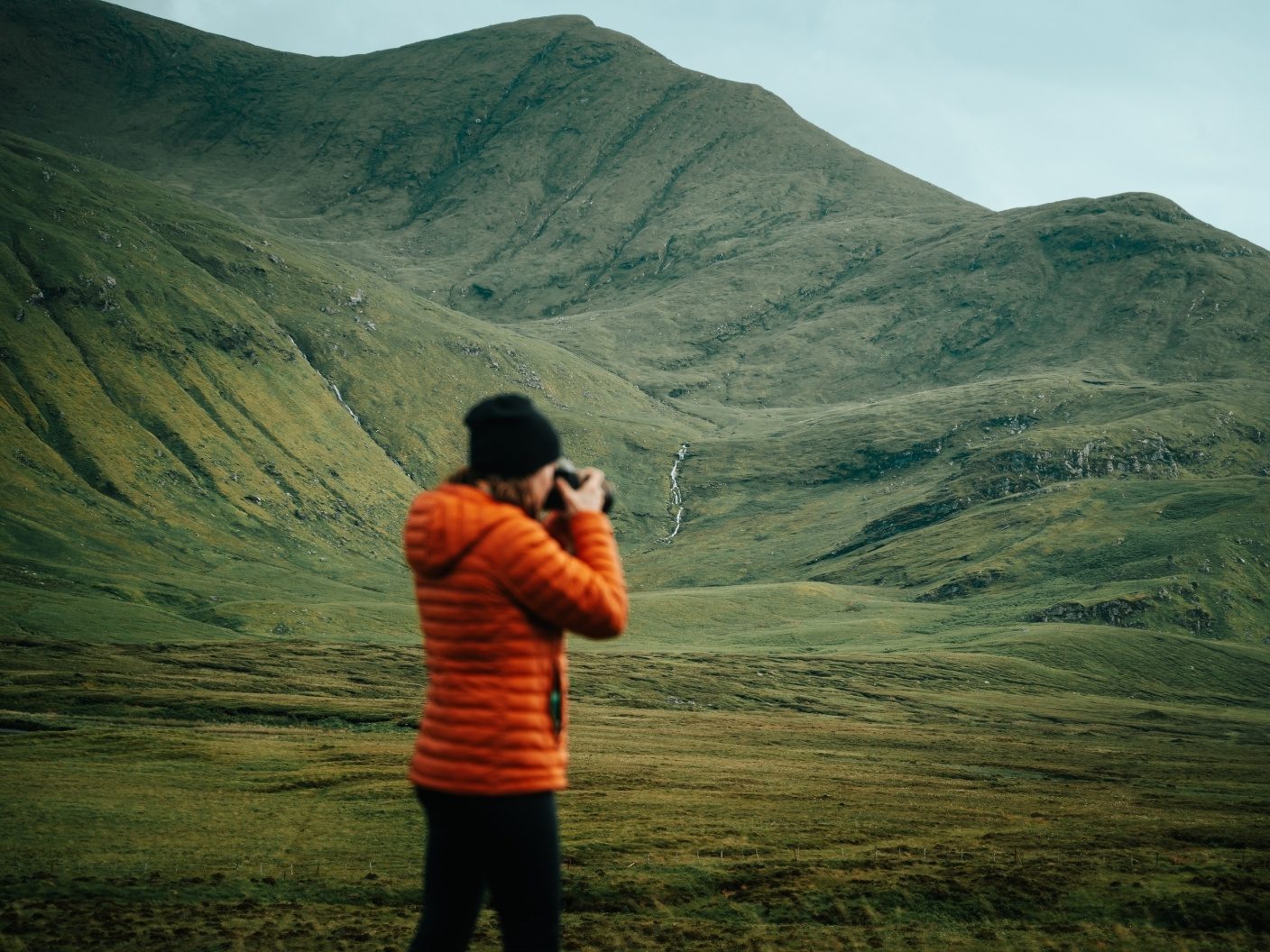
It’s one of the things that makes Scotland truly special. Since 2003, the Land Reform (Scotland) Act grants everyone the right to access and camp on almost all land in Scotland (including private properties and national parks) as long as they respect the Scottish Outdoor Access Code.
In practice, this means you can pitch your tent (or unfold your rooftop tent) facing Loch Ness, at the foot of Ben Nevis, or on a beach in the Highlands without asking anyone for permission. It’s a rare freedom, and the Scots are proud of it.
Rules to Follow
The right of access comes with simple responsibilities:
- Don’t stay more than 2–3 nights in the same spot
- Keep a reasonable distance from private homes and gardens
- Leave places exactly as you found them
- No fires during dry periods, and always use a stove in wooded areas
- Take all your waste with you: there are often no bins in the wild
Areas to Avoid
Wild camping is prohibited in certain specific areas, particularly around Loch Lomond and in some parts of the Trossachs National Park, from March 1 to September 30. These areas have designated official campsites, so make sure to use them.
The official campsites in Scotland
Why official campsites, even when wild camping is legal?
Simple: hot showers, toilets, electricity to charge your devices, and often a washing machine. After 3 days of hiking in the Highlands under the rain, that's exactly what you need.
Scottish campsites are also often very well located: by a loch, facing a mountain, at the entrance of a village. It's not a compromise on the view at all.
What it costs
Expect £20–35 (€23–40) per pitch for two people with a vehicle. Campsites in national parks (Loch Lomond, Cairngorms) are often a bit pricier. For 7 nights, budget around €160–280 if you're organizing everything yourself.
With Scotland Nomads, your 7 nights of camping are included in the price, booked in advance at carefully selected spots along the route.
The best camping chains
- Camping and Caravanning Club: reliable, well-maintained, available throughout Scotland
- Forestry and Land Scotland: campsites in the forest, often very well placed
- Independent campsites: often the most beautiful, look for them on Pitchup or Coolcamping
The rooftop tent: the best of both worlds
Why it's perfect for Scotland
The rooftop tent is the ideal format for a Scottish road trip. You have the freedom of camping: sleep anywhere, be close to nature, with the comfort of a real mattress and clean bedding. And best of all, you're protected from the cold, damp ground of the Highlands.
Imagine: you stop at a breathtaking view on the Isle of Skye, you set up your rooftop tent in two minutes, and you wake up the next morning to that view. That's exactly how it goes with Scotland Nomads.
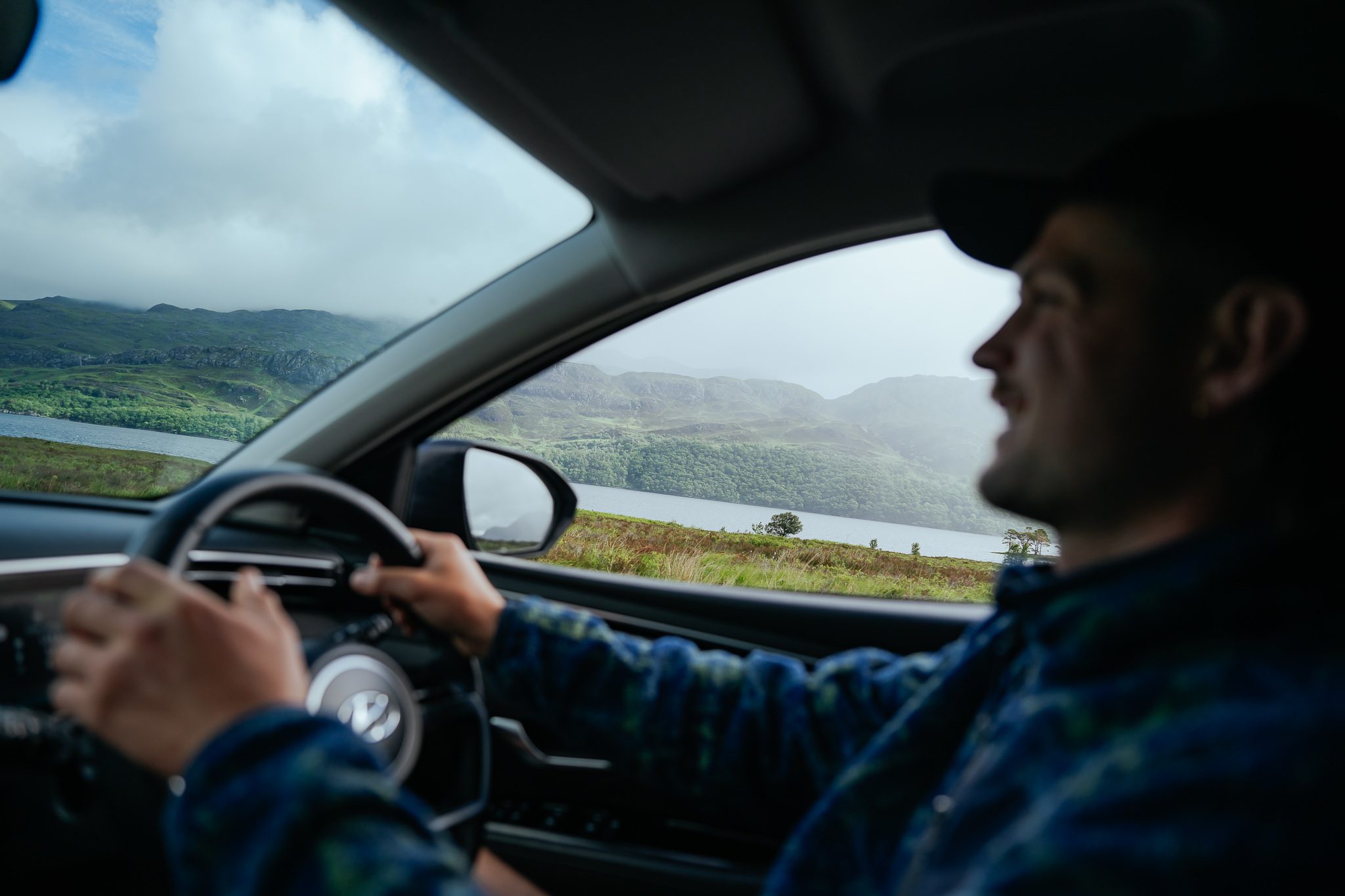
Convenient on Scottish roads
The single-track roads of the Highlands impose a slow pace, and that's a good thing. It means you have time to spot places along the way, stop spontaneously, and adjust your itinerary according to the weather and your desires. The SUV with a rooftop tent gives you that total flexibility.
The best spots for camping in Scotland
The Isle of Skye
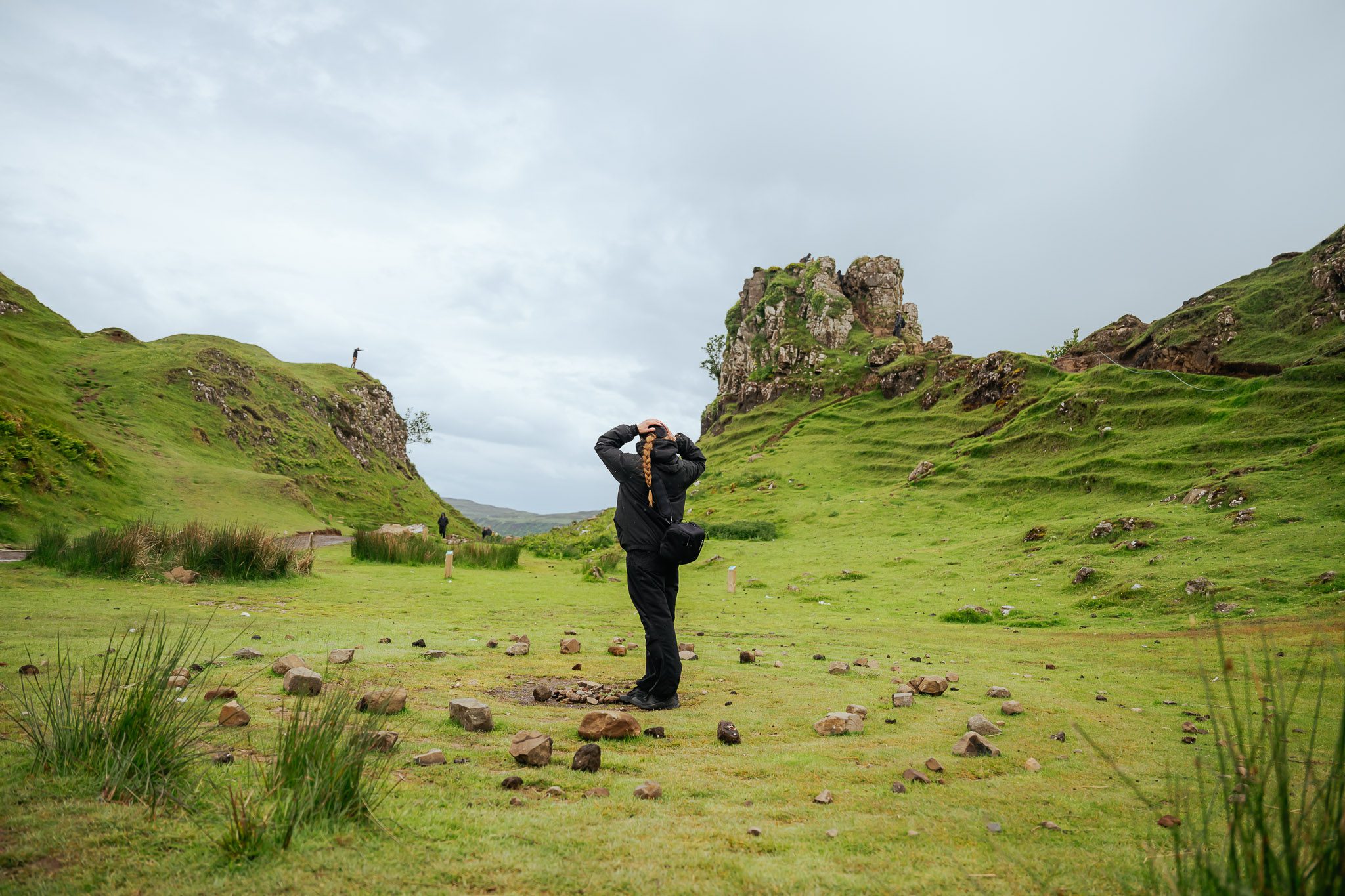
Skye is the ultimate camping destination in Scotland. The campsites in Portree are well-equipped and ideally located for exploring the Quiraing, the Old Man of Storr, and the Fairy Pools. Expect to pay £25–30 per night.
For an unforgettable wild camping night, the edges of the Trotternish peninsula offer sea views and vistas of the Outer Hebrides that will stay with you for a long time.
The Cairngorms
The largest national park in the UK offers an impressive variety of spots. The campsites around Aviemore are excellent as a base, with direct access to hiking trails. The Caledonian forest surrounding some sites creates a truly unique atmosphere.
Loch Lomond
The first stop on the Scotland Nomads itinerary, Loch Lomond is one of the most beautiful camping spots in Scotland. The waterfront pitches, with the loch in the foreground and the first hills of the Highlands in the background, are exactly what you imagine when dreaming of Scotland.
Note: wild camping restrictions are in place from March 1 to September 30; please use official campsites.
The Northwest Highlands
This is where Scotland is at its wildest. Around Torridon, Applecross, and Shieldaig, the campsites are small, often family-run, and offer views of the sea lochs that rival any Scandinavian scenery. It's also where the midges are most active in the evenings: be sure to bring repellent.
Glen Coe
Camping in Glen Coe valley means sleeping in the heart of one of the most dramatic valleys in Europe. The mountain slopes drop steeply on either side of the road, and the late afternoon light turns everything into a painting. The Glencoe Village campsite is a classic.
Essential gear for camping in Scotland
What you absolutely need to have
A proper raincoat: Not a supermarket windbreaker. A real Gore-Tex raincoat or equivalent. The rain in Scotland is fine, horizontal, and comes without warning. You'll be glad you have it.
Waterproof shoes: Scottish trails are often muddy, even in the middle of summer. Waterproof hiking shoes and merino wool socks completely change the experience.
A midge repellent: We're serious about this. Midges (tiny biting flies) are active from dusk until dawn, especially in damp areas and woodlands. Smidge is the local go-to. Avon Skin So Soft is the old-school remedy that surprisingly works well.
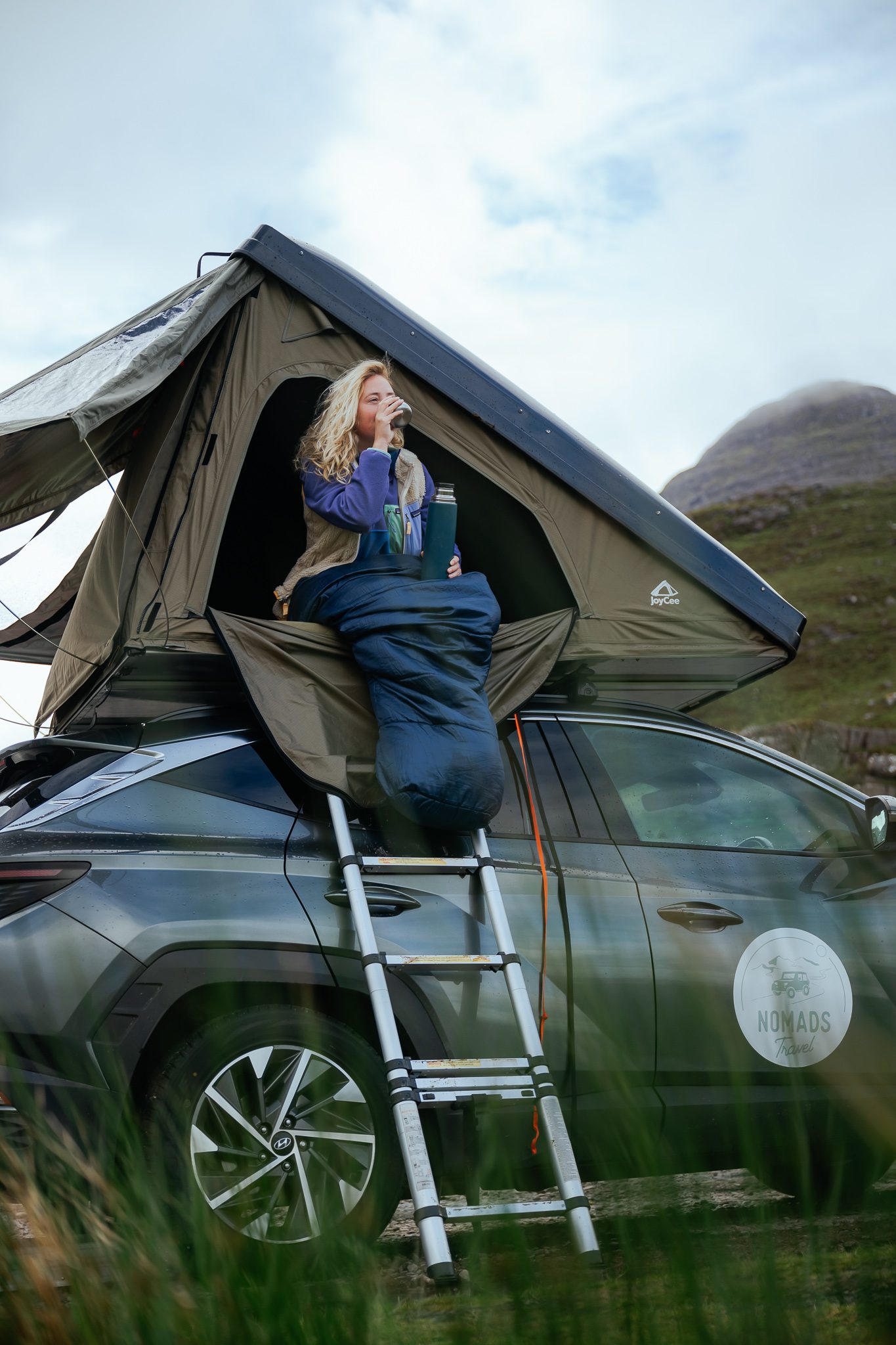
A suitable sleeping bag: Even in July, nights in the Highlands can drop to 8–10°C. A 3-season sleeping bag is the minimum. With Scotland Nomads, sleeping bags are provided and suited for Scottish temperatures.
What Scotland Nomads already includes
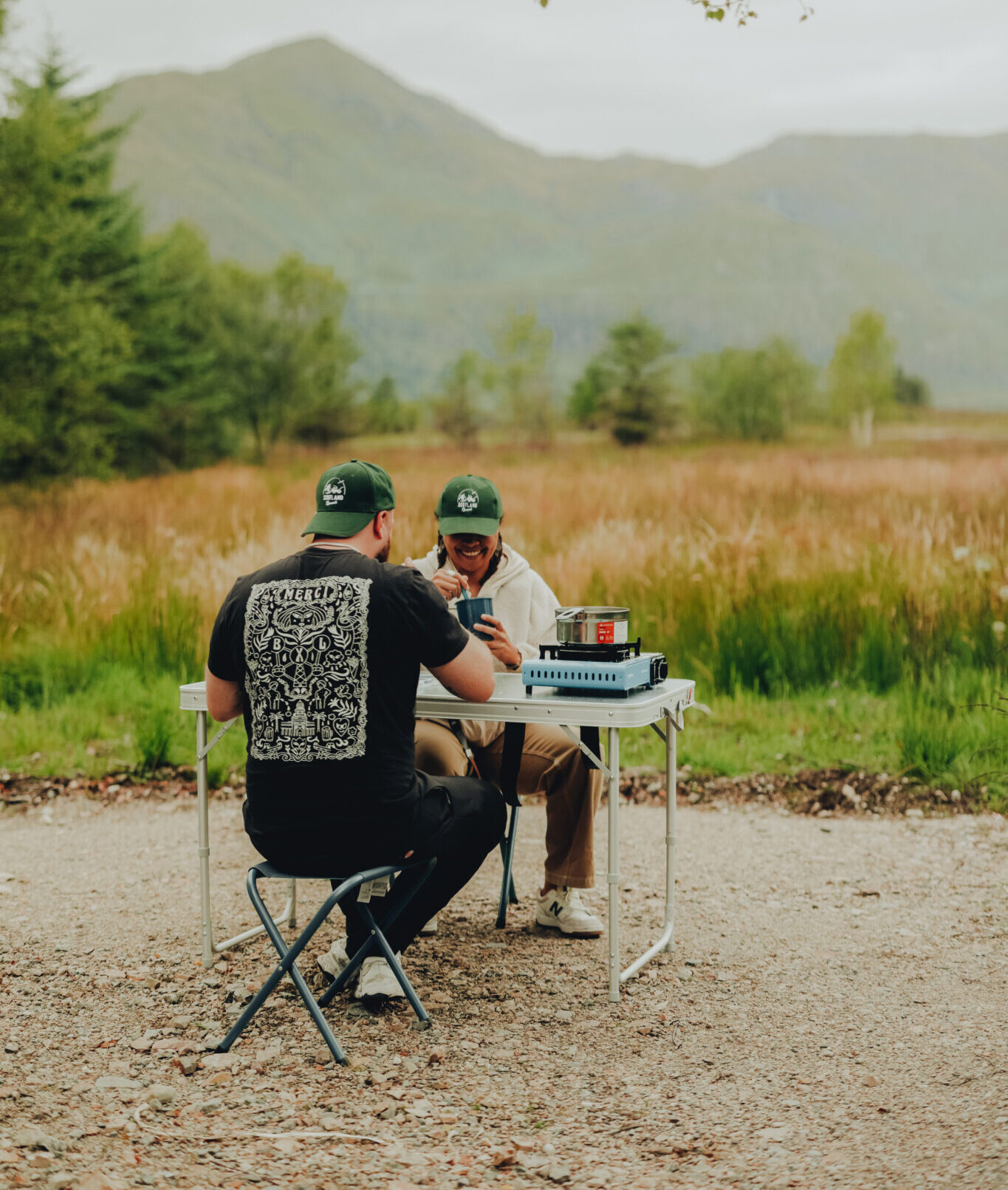
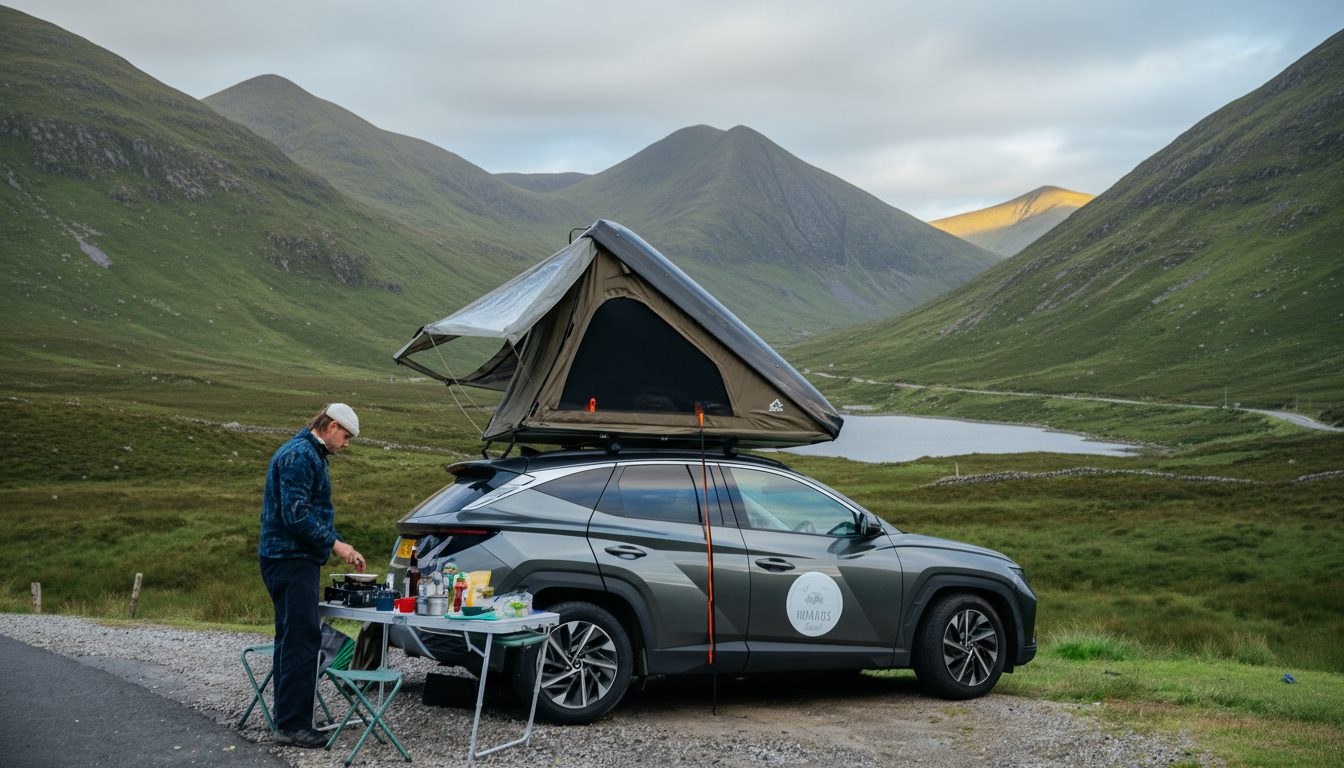
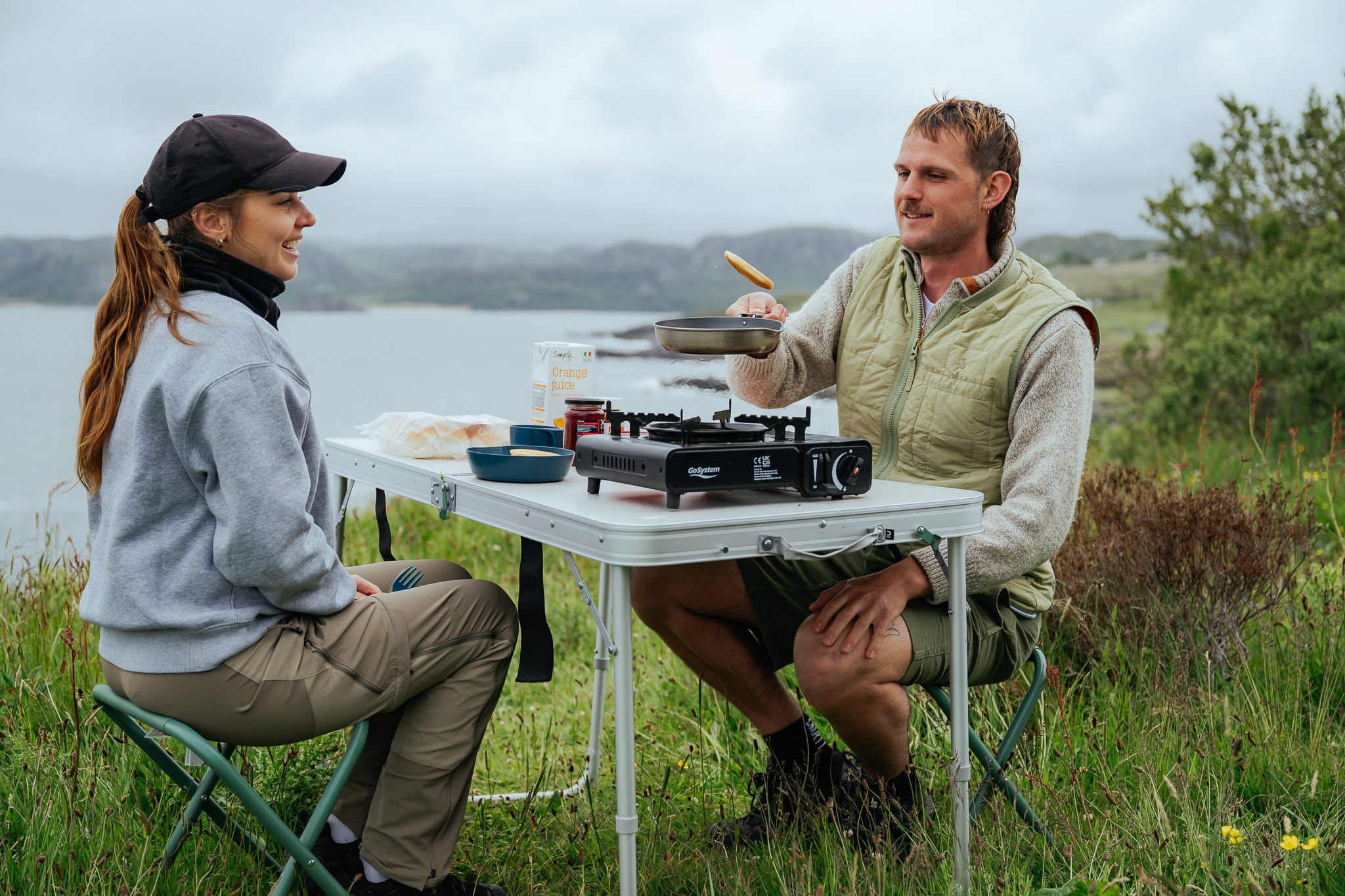
With our package, you don't have to worry about camping gear. The SUV is equipped with double mattresses, sleeping bags, pillows, a stove, pans, plates, and cups. There's also a table and stools. You arrive with your personal luggage: we take care of the rest.
Logistics and supplies
Where to Shop in Scotland
The major cities (Edinburgh, Inverness, Fort William) have all the usual supermarkets: Tesco, Lidl, Aldi, Sainsbury's. Stock up there — in the Highland villages, local shops are charming but tend to have tourist prices.
On the Isle of Skye, the Co-op in Portree is your best option. Make sure to stock up well before heading to the more remote areas of the island.
Water
It is excellent everywhere in Scotland: from the tap and mountain springs. Bring a filtered water bottle and you’ll never have to buy bottled water.
Connectivity
Mobile coverage is decent on the main roads and in cities, but expect to lose signal in the Highlands and on the Isle of Skye. Download your maps offline (Maps.me or Google Maps offline) before you head out. The Scotland Nomads app works with a downloadable interactive map, handy in areas with no signal.
Camping in Scotland with Scotland Nomads
If you want to experience camping in Scotland without the logistics, that's exactly what Scotland Nomads offers. A fully equipped SUV with a roof tent, 7 nights in carefully selected campsites along the route from Loch Lomond → Isle of Skye → Cairngorms, a detailed roadbook, and assistance available throughout the trip.
Your campsites are booked in advance: during peak season, that's a real advantage. You arrive in Edinburgh, pick up the keys, and spend that night by the shores of Loch Lomond.